A fence seems like one of those projects that should be easy.
You measure the yard, decide how tall you want it, pick a material, and call someone for an estimate. At least, that’s how it looks before you start digging into it.
Then somebody tells you cedar lasts longer than pine. Another neighbor swears vinyl is the only way to go because they haven’t touched theirs in fifteen years. Your HOA has opinions. Your spouse has different opinions. The internet somehow manages to make both materials sound like the obvious choice.
By the time you’ve read your tenth article, you’re no closer to making a decision than when you started. I’ve always enjoyed home projects, but I’ve learned that the expensive mistakes usually happen long before the first board gets installed. They happen during the planning stage, when it’s tempting to focus on one thing, usually price, and ignore everything else that comes with living alongside that project for the next couple of decades.
A fence is one of the few improvements you’ll look at every single day. It frames your backyard, keeps kids and pets safe, gives you privacy, and quietly becomes part of your home’s personality. Unlike a fresh coat of paint or new patio furniture, it isn’t something most people plan on replacing anytime soon.
Wood and vinyl both have a lot going for them. Neither is perfect, and anyone who tells you otherwise is probably trying to sell one of them.
Before you make your decision, here are a few things worth thinking about.
1. The Estimate Is Only Part of the Cost
It’s hard not to compare numbers when the estimates start coming in.
If one proposal is several thousand dollars less than another, your eyes naturally go there first. That’s completely understandable, but it can also be misleading if you stop the comparison there.
Wood fencing often costs less to install than vinyl. Depending on the species, style, and height, that difference can be significant. For homeowners working within a fixed budget, wood may be the only option that comfortably fits today.
The question is what happens after installation.
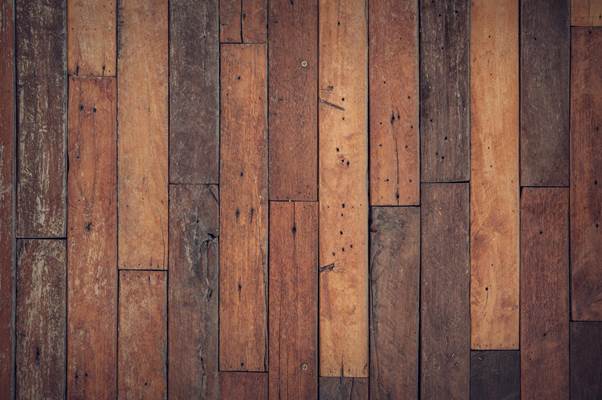
Wood asks for something from you over the years. Maybe that’s staining every few seasons. Maybe it’s replacing a few pickets after a storm or tightening hardware as everything settles. None of those jobs are particularly difficult, but they do become part of owning the fence.
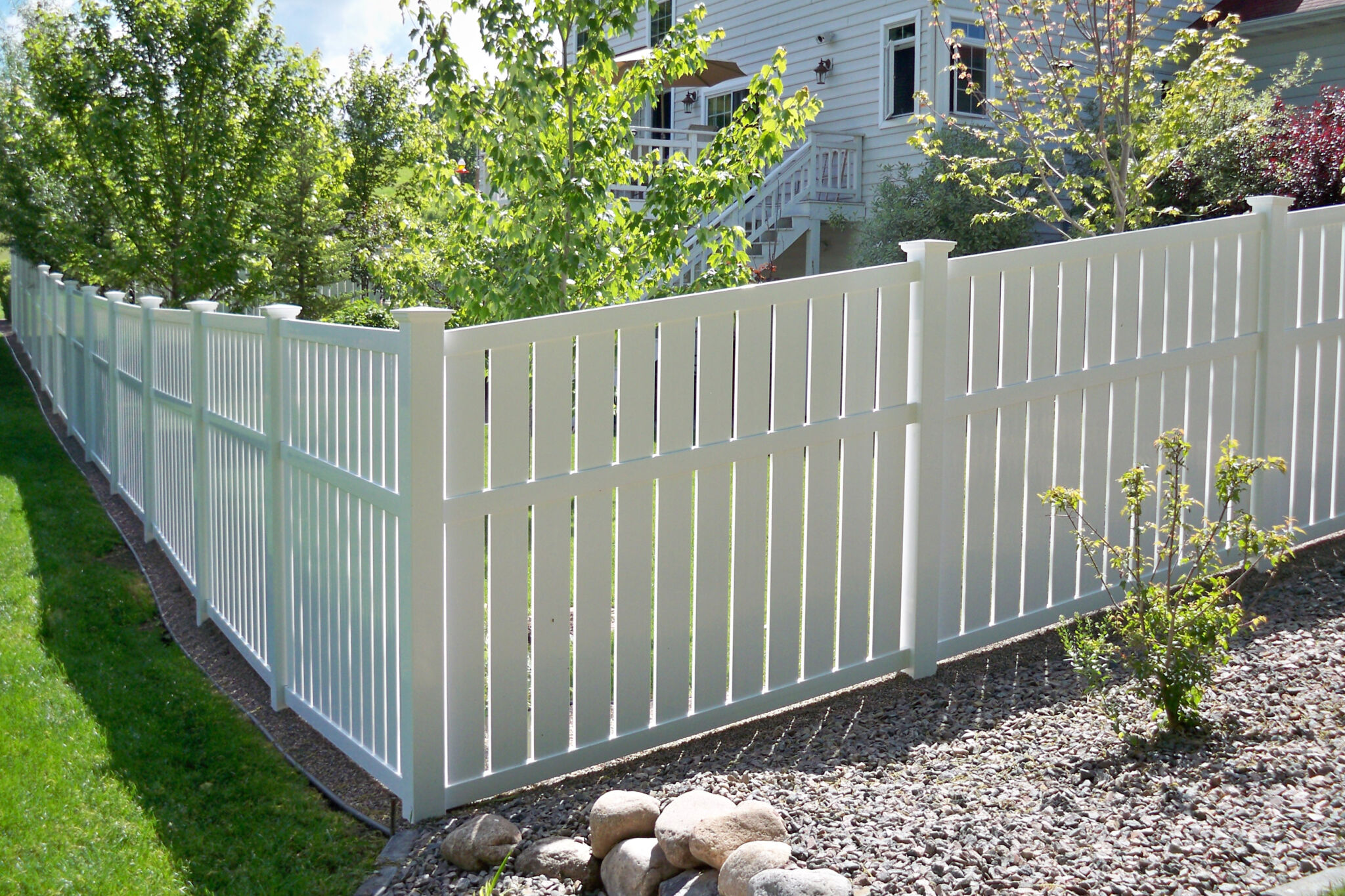
Vinyl shifts more of the investment toward the beginning of the project. The upfront price is usually higher, but the ongoing maintenance is considerably lighter. Many homeowners happily make that trade because they’d rather spend more once than keep spending time and money every few years.
Neither approach is wrong.
The mistake is comparing only the installation price without asking yourself what the fence will cost in time, maintenance, and repairs over the next fifteen or twenty years.
2. Be Honest About How You Spend Your Weekends
One thing I’ve noticed after years of tackling projects around the house is that people tend to picture an ideal version of themselves.
The version that’s always going to stain the fence before winter.
The version that’s definitely going to pressure wash everything every spring.
The version that organizes the garage every fall.
Sometimes that person exists.
Sometimes life gets busy instead.
Kids have games. Work gets hectic. Vacations happen. Before you know it, another summer has passed and the fence still hasn’t been sealed.
If you genuinely enjoy maintaining your property, wood can be rewarding. Fresh stain brings out the grain in a way manufactured materials simply can’t match. There is something satisfying about taking care of natural wood and watching it continue to look beautiful because of the effort you’ve put into it.
If maintenance feels more like another chore on an already long list, vinyl starts making a lot of sense.
A quick rinse with the hose usually takes care of dust and pollen. Occasionally it needs a little soap if sprinklers leave mineral deposits behind, but that’s a very different commitment than setting aside an entire weekend to stain hundreds of feet of fencing.
There isn’t a right personality for either material.
There is only the question of which one matches the way you already live.
3. Colorado Doesn’t Treat Every Fence the Same
People from other parts of the country sometimes underestimate how much Colorado weather asks from outdoor materials.
The sun is stronger here than many people expect because of the elevation. UV exposure slowly breaks down finishes. Dry air pulls moisture from wood. Spring snow can be surprisingly heavy. Wind has a habit of finding the weakest section of a fence and introducing itself. Quality lumber, properly set posts, good drainage, and regular maintenance make an enormous difference in how a wood fence performs over time. A neglected wood fence and a well-maintained cedar fence can have completely different lifespans.
Vinyl responds differently to the climate. It doesn’t absorb moisture like wood does, and it isn’t going to need staining after years of sunshine. That doesn’t mean every vinyl fence is created equal, though.
Thin panels, poor installation, and inadequate reinforcement show up quickly once Colorado weather gets involved. A bargain fence that looks good on installation day may not look nearly as impressive after years of wind, snow, and seasonal temperature swings.
That’s why comparing materials without comparing installation quality only tells half the story.
Good craftsmanship has a way of making both materials perform better.
4. Your Yard Is Going to Make Part of the Decision for You
One thing I don’t think gets talked about enough is that you’re not buying a fence in a vacuum. You’re buying one for a specific piece of property, and every yard comes with its own personality.
A flat subdivision lot with one shade tree asks very different things of a fence than a corner lot that catches every gust of Colorado wind. If your backyard backs up to open space, you may care more about preserving the view than creating complete privacy. If your dog has spent the last five years sprinting the perimeter every morning, durability probably climbs much higher on your priority list. Then there are the practical details that don’t show up until someone starts laying out string lines. Sprinkler systems, retaining walls, mature trees, drainage swales, and utility easements all influence how a fence gets built.
This is one reason I hesitate when people ask, “Should I buy wood or vinyl?” My first question would probably be, “Tell me about your yard.”
The material is important, but it isn’t the whole project. A fence that makes perfect sense on your neighbor’s property might be the wrong fit twenty feet away because the conditions are different. The more you can think about your property instead of a generic comparison article, the easier this decision becomes.
5. Repairs Usually Matter More Than You Think
Nobody shops for a fence expecting to repair it.
You picture the finished project, not the spring storm that drops a heavy branch across one section or the afternoon somebody accidentally bumps the gate while backing up a trailer. Repairs aren’t exciting, but they become part of owning almost anything that lives outdoors long enough.
Wood has one advantage that’s easy to appreciate once you’ve owned it for a while. Damage is often isolated. If one picket cracks or one rail begins to fail years down the road, replacing that individual piece is usually straightforward. You aren’t rebuilding the entire fence because of one problem area.
Vinyl takes a different approach. It often goes years without asking much of you, but when something does happen, repairs can involve larger components depending on the style and manufacturer. That’s not necessarily a downside. It’s simply part of understanding how the material works before you’re standing in the backyard trying to figure out what comes next.
I’d also ask prospective installers how easy it is to get matching materials in the future. Manufacturers update product lines, colors change, and having that conversation before the fence goes in is a lot easier than hoping identical replacement parts still exist ten years later.
6. Try to Picture the Backyard You’re Still Building
One of my favorite things about owning a home is that it never stays exactly the same.
A bare backyard slowly becomes a place where people gather. Maybe you start with a fence because the dog needs somewhere to run. A few years later you pour a patio. Then somebody decides a fire pit would be nice. Suddenly there are string lights overhead, a grill in the corner, and flower beds where there used to be nothing but grass.
The fence quietly becomes the backdrop for all of it.
That’s why I think it’s worth stepping back before making a final decision. Don’t ask yourself which fence looks best today. Ask yourself which one fits the yard you’re slowly creating.
Some homeowners love the idea of cedar aging naturally alongside new landscaping. Others know they’d rather spend future weekends planting trees than staining boards. Neither answer is more responsible than the other. They’re simply different ways of enjoying the same space.
Home projects have a way of connecting with one another. The choices you make now influence everything that comes after, even if you don’t realize it yet.
7. Spend a Few Minutes Looking Around Your Neighborhood
Whenever I move somewhere new, I like taking long walks before I change anything outside.
It’s interesting what you notice when you’re paying attention.
Some neighborhoods are filled with cedar fencing that’s been there for decades. The color has softened, vines have climbed across sections of it, and somehow the whole neighborhood feels established because of it. Other developments have almost entirely vinyl fencing, and it works because the homes were designed with that look in mind from the beginning.
You don’t have to match everyone around you. In fact, a little variety usually makes a neighborhood more interesting.
Still, it’s worth asking why certain materials became common where you live. Sometimes it’s HOA requirements. Sometimes it’s climate. Sometimes homeowners simply found that one option made more sense over the years.
While you’re thinking about the neighborhood, there’s another conversation that’s worth having before construction begins. Make sure you know exactly where your property line is.
It’s one of those details that’s easy to assume you understand until two neighbors discover they’ve been looking at two different boundaries for years. A survey may not be the most exciting part of the project, but compared to moving a newly built fence, it’s a relatively inexpensive insurance policy.
8. Some People Love the Way Wood Ages. Others Don’t.
One of the reasons these debates never seem to end is because they’re often about taste more than performance.
I’ve met homeowners who wouldn’t trade a cedar fence for anything. They like seeing the grain, the knots, and the subtle changes that happen as the wood weathers over time. To them, that’s part of the appeal. The fence grows into the property instead of looking exactly the same forever.
I’ve met just as many people who feel the opposite.
They appreciate walking into the backyard year after year and seeing a fence that looks almost identical to the day it was installed. No staining schedule taped to the garage wall. No more wondering if this is the summer they finally need to refinish it. They clean it once in a while and move on to something else.
Neither perspective needs defending because they’re based on what people enjoy living with.
When you’re looking at samples, try to picture them several years from now instead of installation day. That’s the version you’ll spend the most time looking at.
9. The Best Fence Is Usually the One You Stop Thinking About
After reading reviews, collecting estimates, comparing materials, and talking with neighbors, it’s easy to feel like you’re making an enormous decision.
In some ways, you are.
A good fence will probably be part of your property for decades. It’s worth taking the time to choose carefully.
At the same time, I think homeowners sometimes put unnecessary pressure on themselves to find the perfect material, as though one choice guarantees success and the other guarantees regret. Most of the time, that’s simply not how these projects work.
A well-built cedar fence can serve a family beautifully for many years. The same is true for a quality vinyl fence installed with equal care. What usually separates a project people love from one they complain about isn’t the material itself. It’s how well that material matched their expectations from the beginning.
That’s one reason it’s helpful to work with a contractor who installs both instead of pushing every customer toward a single solution.
Once the fence is finished, the goal isn’t to admire the material every time you walk into the backyard. The goal is to enjoy the yard itself. If, a few months after the project is complete, you’ve stopped thinking about the fence altogether because it simply fits your home and your routine, you probably made the right choice.